Product
Web App
Skills
Design principles & frameworks
Information Architecture
User flows
Dev handoff
My role
Lead UX designer
Timeline
2020-2021
Team
Design Manager, UX Design Lead (me), Junior Designers (UX + Visual), Business Analysts, Tech Team
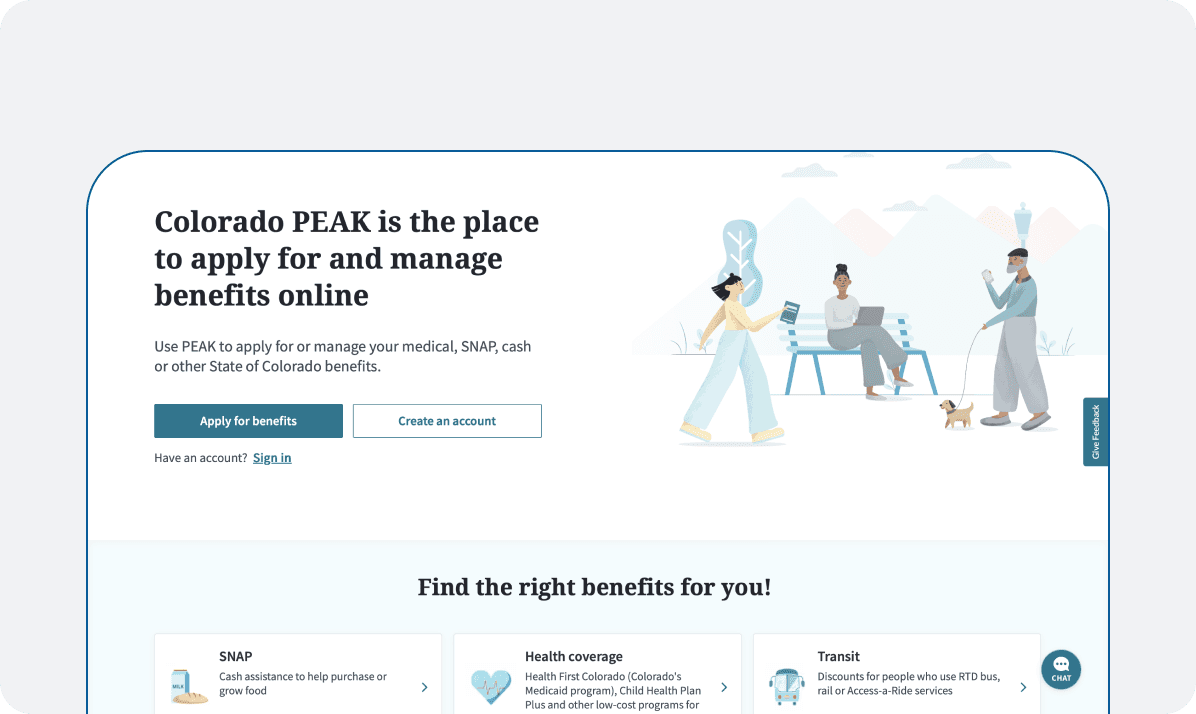
The Platform PEAK (Program Eligibility and Application Kit) enables Colorado's low-income citizens to screen for, apply to, and manage medical, food, cash, and early childhood care benefits.
The problem
63% of citizens didn't trust PEAK to accurately determine their benefits
Inconsistent design patterns and overwhelming information eroded public trust
Case backlogs and high call volume to county caseworkers
Citizens losing benefits due to usability issues
Caseworkers unable to maintain cases effectively
The Challenge Create a simple, reliable experience that rebuilds citizen trust and helps them navigate state-issued benefits confidently.
As UX Design Lead, I:
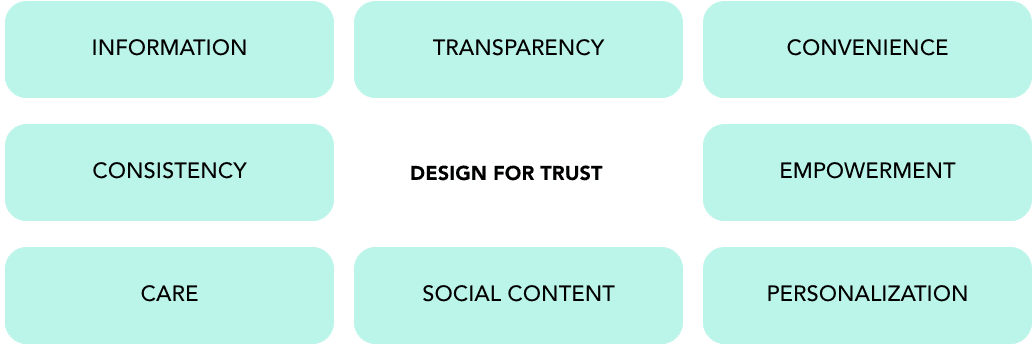
Created design foundation establishing "Design for Trust" framework with 8 guiding principles based on simplicity and reliability research
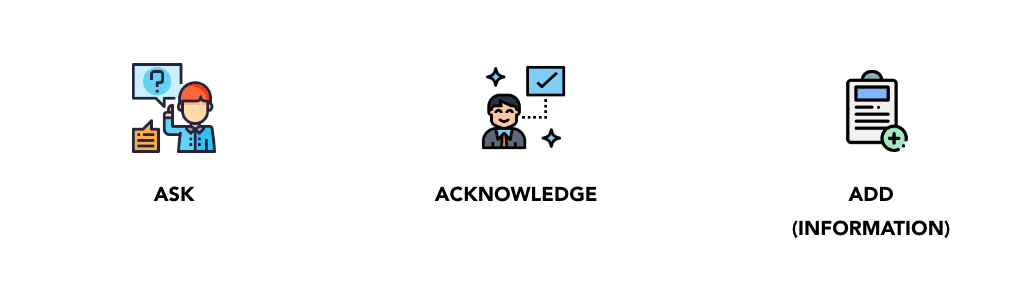
Developed form-filling framework (3A Framework) to simplify complex application processes
Led user flow creation and wireframing for primary citizen journeys (learn and apply paths)
Guided junior designers in executing optimal design solutions
Collaborated with separate research team to synthesize insights into actionable design decisions
Contributed to PEAK design system for development and future maintenance teams
Research Synthesis Analyzed insights from research team's extensive study:
3,636 survey responses across 60 of 64 Colorado counties
95% of citizens have technology access, 90% comfortable using it
64% use PEAK to apply for benefits
76% prefer digital channels for all actions
47.8% have called/visited in-person for support (indicating digital experience failures)
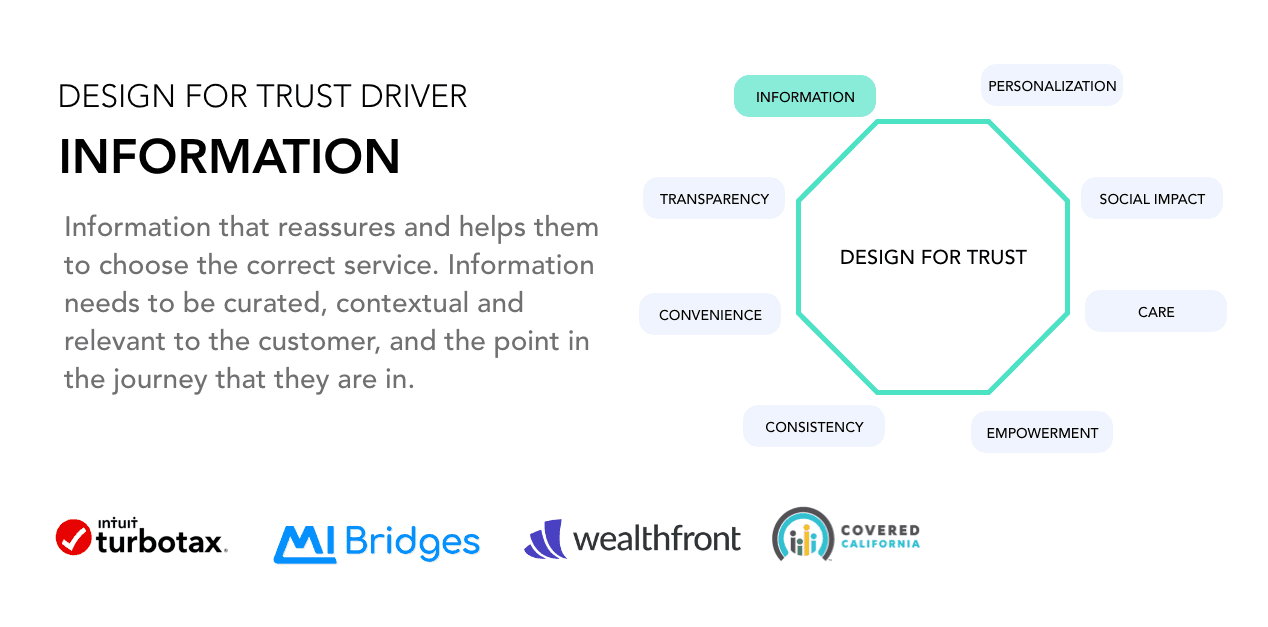
Strategic Framework Created "Design for Trust" framework identifying 8 foundational principles that drive service satisfaction in government contexts. Research shows citizens are 9x more likely to trust government services when satisfied with the experience.
Key principles: Simplicity, reliability, transparency, clear expectations, appropriate information, easy interactions
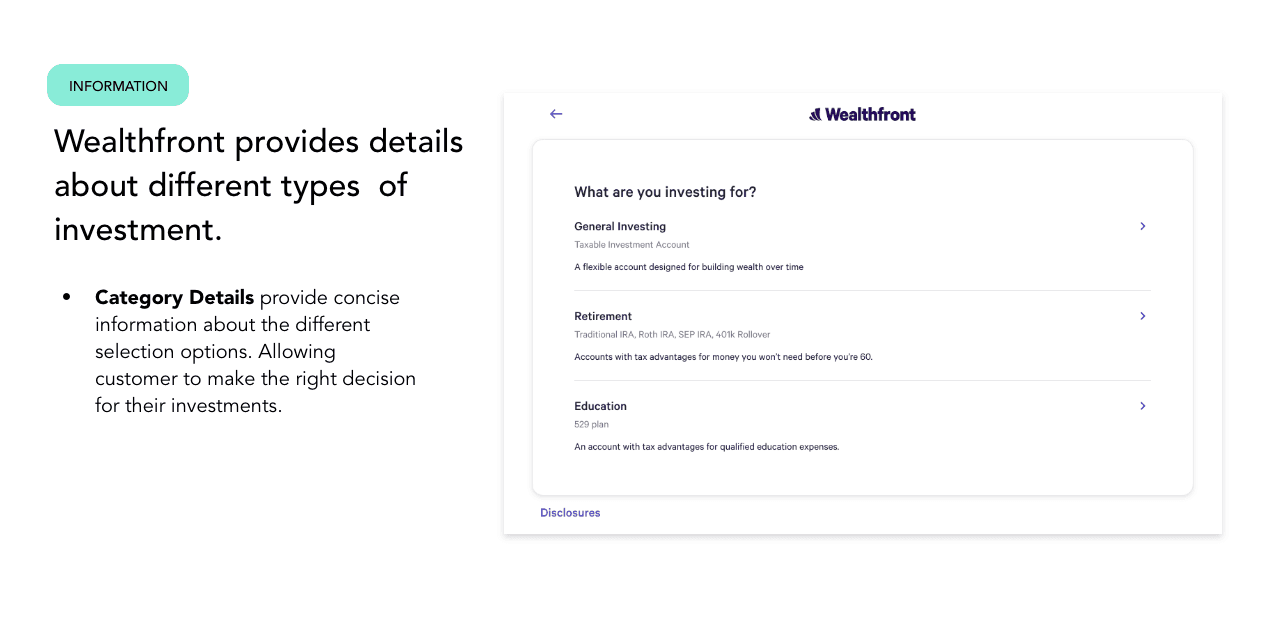
The 3A Framework Studied platforms handling complex form-filling and confidential data to identify overarching framework for simplification. Developed 3A Framework tying back to Design for Trust principles.
Form Design Structure Created three structural approaches to aid simplification and relevance:
One thing per page: Focused, digestible information requests
Nested view: Contextual grouping of related questions
Progressive disclosure: Information revealed based on individual user needs
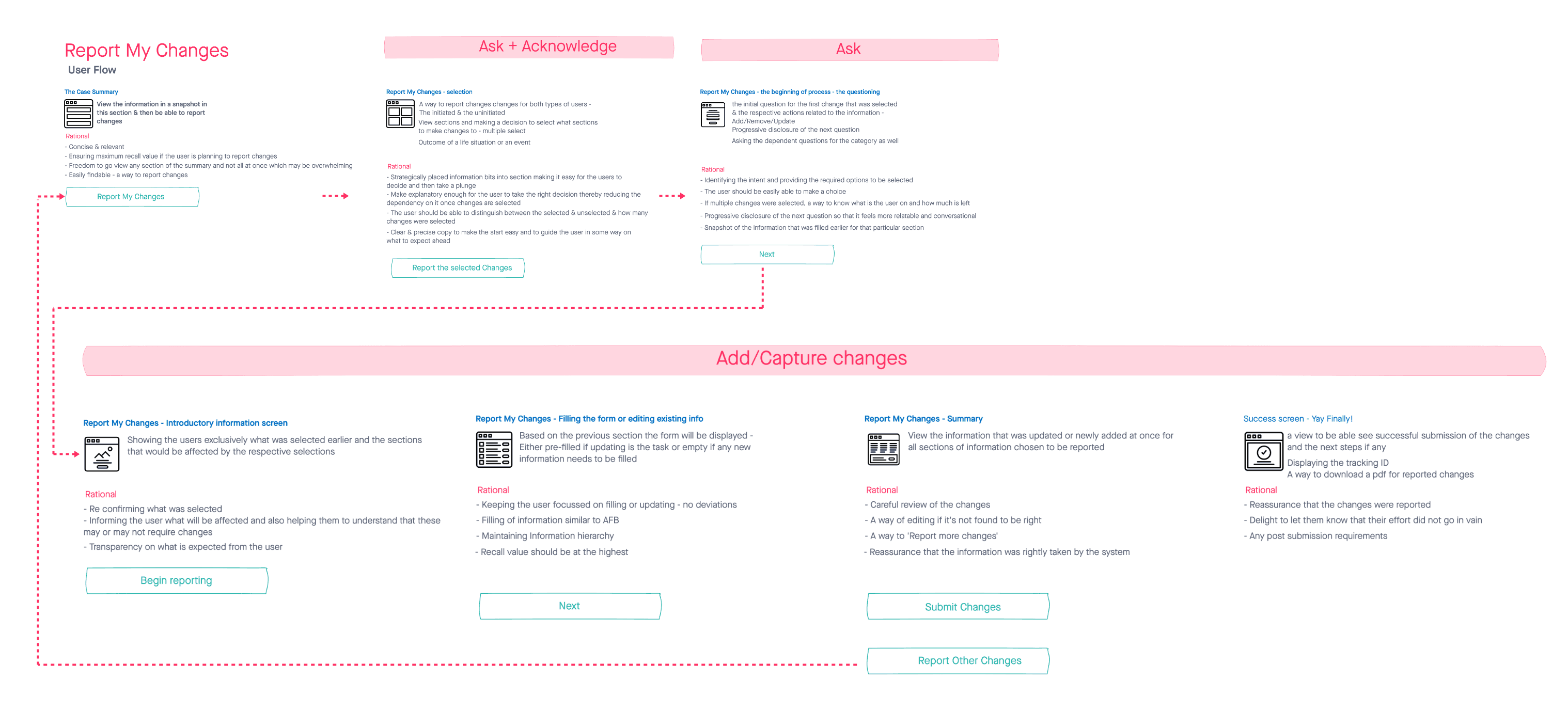
User Flow Innovation Designed user flows for complex journeys (e.g., "Report My Changes") showcasing new structure and flow based on individual citizen needs. Determined optimal question sequencing and identified where users need guidance.
Spotlight: Report my changes
Challenge One of the most complex citizen journeys identified in research—users struggled to update their case information, leading to benefit loss.
Solution
Redesigned user flow based on 3A Framework and Design for Trust principles
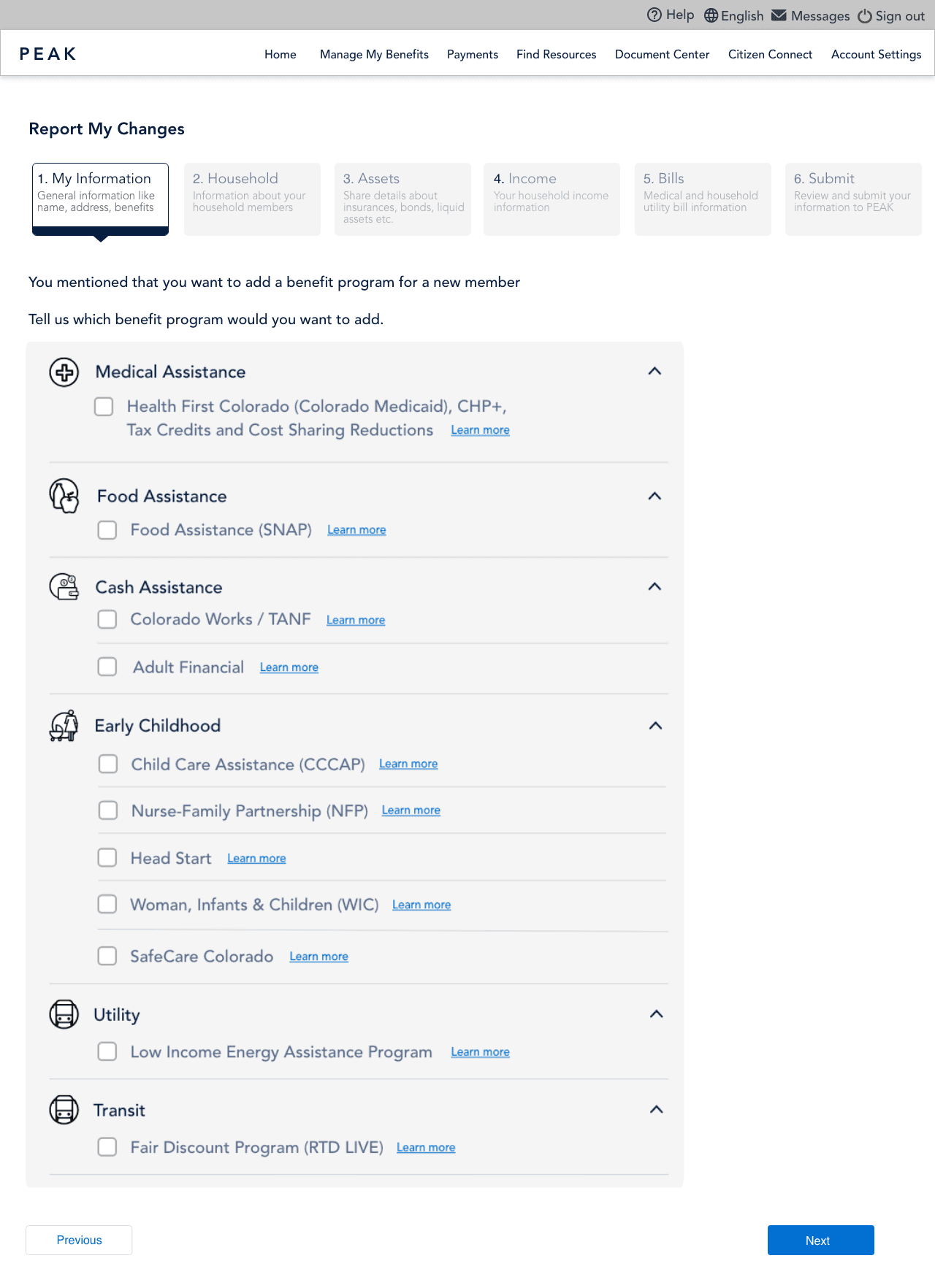
Applied "one thing per page" structure for clarity
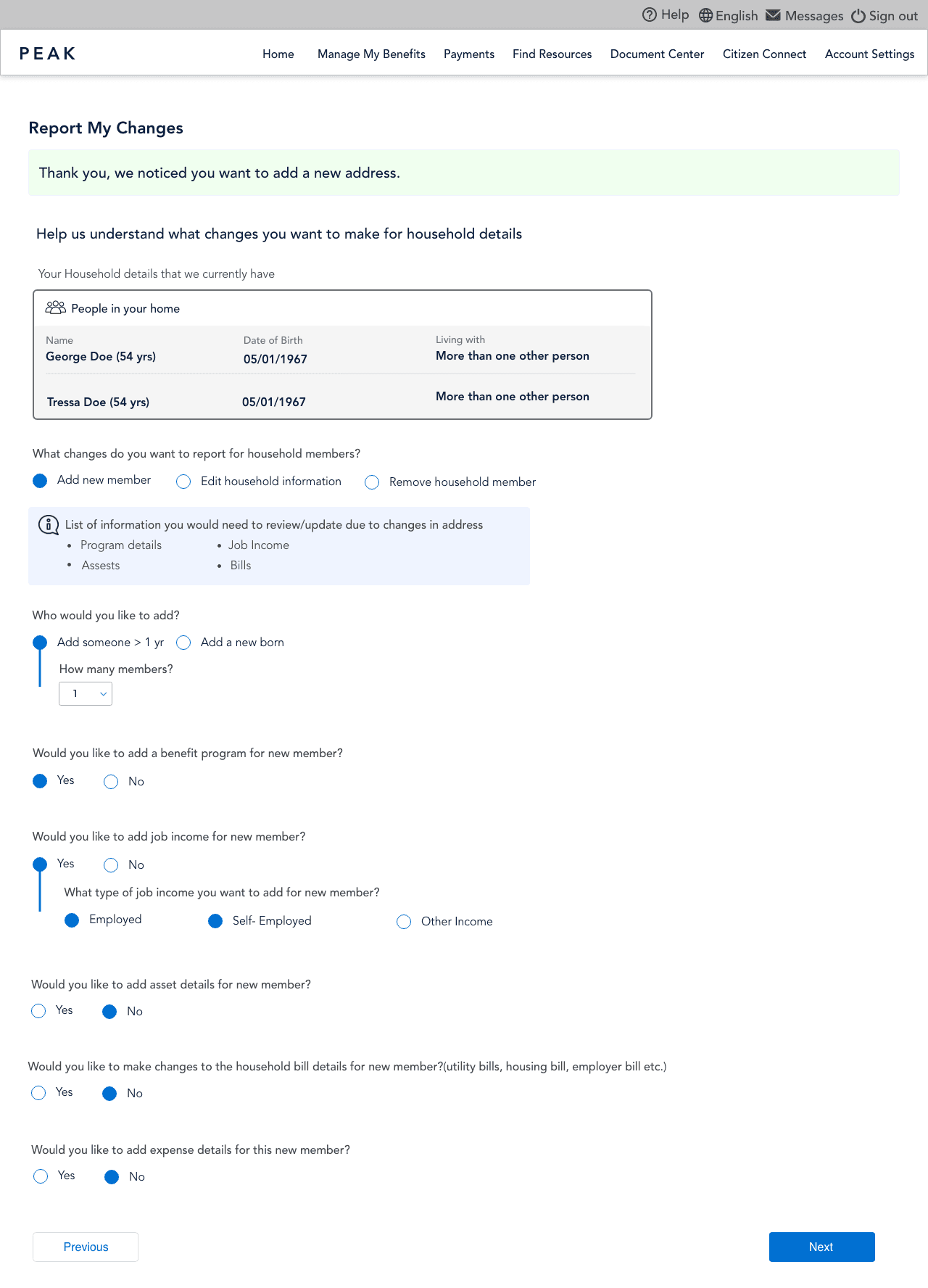
Implemented progressive disclosure showing only relevant questions
Created low-fidelity wireframes demonstrating future experience
Design Decision
Question sequencing based on user mental models, not system requirements
Contextual help and guidance at decision points
Clear explanation of why information is needed (building trust through transparency)
Impact