 Next Project
 Get in touch
Customer service transfomation
Designing a seamless customer experience for all touch points in the customer life cycle for Oil & Gas downstream business
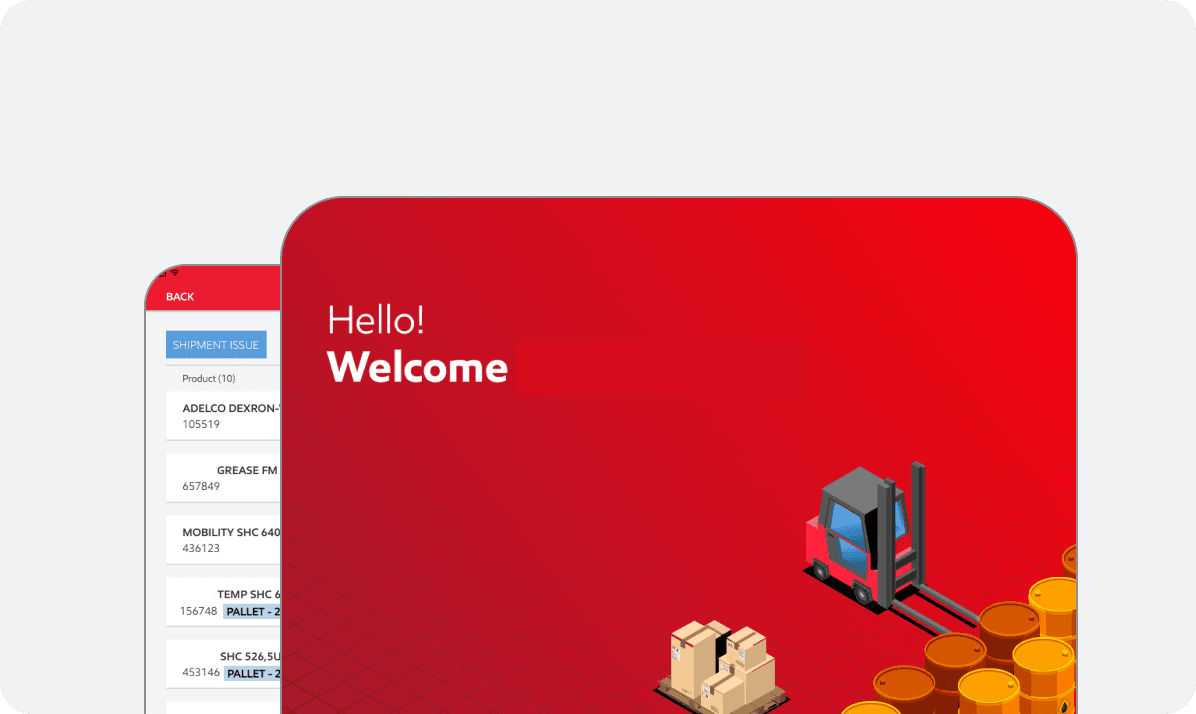
How do you transform a fragmented customer experience spanning an entire business lifecycle? I led UX design for a digital transformation program that turned 4 MVPs into globally-scaled products, driven by a customer feedback strategy that informed $XX million investment decisions.
Product
Web App, Tab & Mobile Apps
Skills
Established design practice
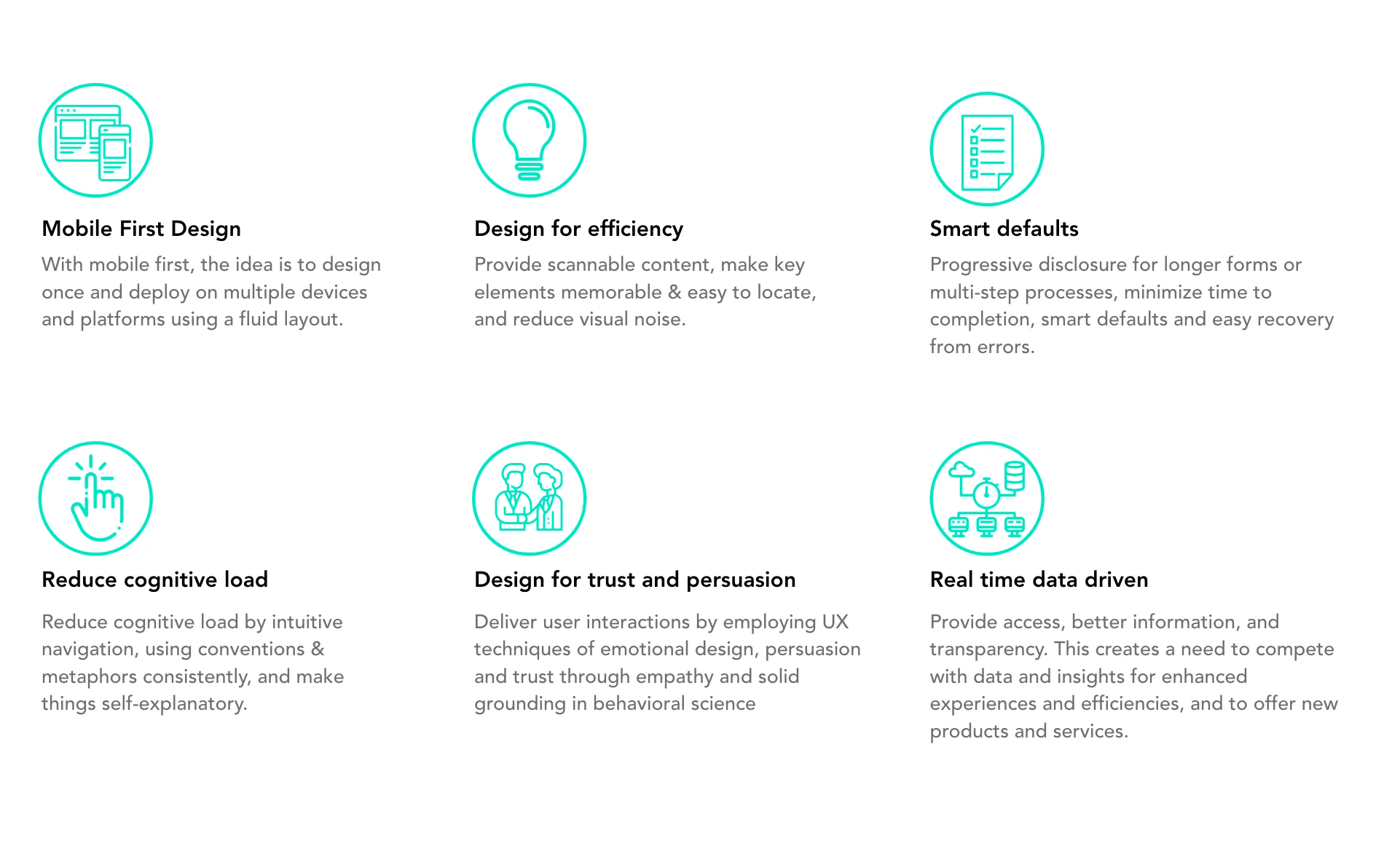
Design principles
Information Architecture
Stakeholder management
Dev handoff
My role
Sr UX designer
Timeline
2 years
Team
6+ designer + stakeholder
Connecting the dots
Our oil & gas client's e-commerce platform was live globally—but the customer experience surrounding it was broken. Disconnected touchpoints, fragmented processes, and inconsistent experiences plagued distributors and customers throughout the lifecycle.
The ask: transform the entire downstream customer experience while proving value quickly, working lean, and serving diverse stakeholders across multiple markets.
My role
As Senior UX Designer in the Digital Factory, I:
Led end-to-end design for 4 MVP products (Customer Onboarding, Automated Stock Replenishment, Advanced Offer Deployment, Goods Inspection) from research through usability testing
Oversaw design quality for 2 additional MVPs, providing design direction and ensuring consistency
Synthesized research from UX research team into service design frameworks, customer journey maps, and actionable design insights
Developed customer feedback strategy with usability testing protocols, KPI tracking, and evaluation frameworks to measure MVP success and product performance
Participated in acceleration workshops, creating proof-of-concepts and advocating for user-centered design
Digital factory method
Research Synthesis Synthesized research provided by UX research team—including stakeholder interviews and journey analysis—into actionable design insights covering service design, customer pain points, user roles, and technical constraints.
Strategic Prioritization Collaborated with product teams to rapidly prototype and prioritize initiatives using phased approach (Innovate → Learn → Enable), mapping customer journey to workstreams and breaking ideas into testable MVPs.
Design System Contributed to design team's development of unified design principles (proactive, reactive, retrospective) ensuring consistency across all MVP products.
Design principles
Proactive : Identify opportunities where problems can be predicted.
Reactive : Finding the best possible way of action response to a given situation
Retrospective : Reflection on a past situation to improve future decision-making abilities
SPOTLIGHT: GOODS INSPECTION APP
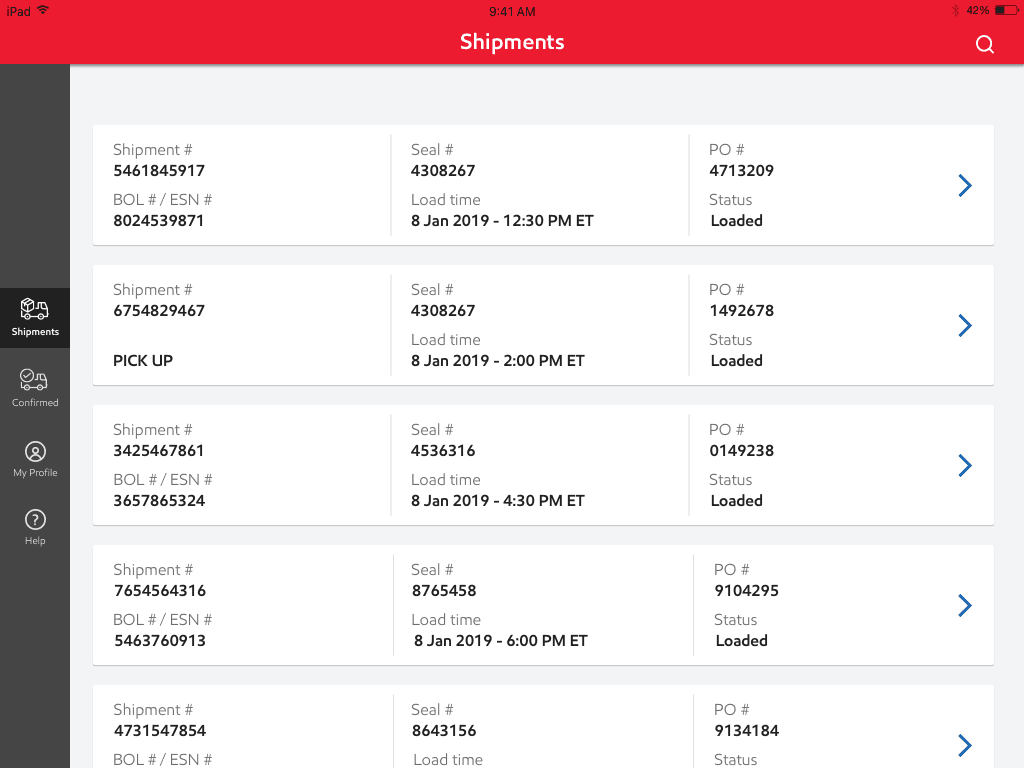
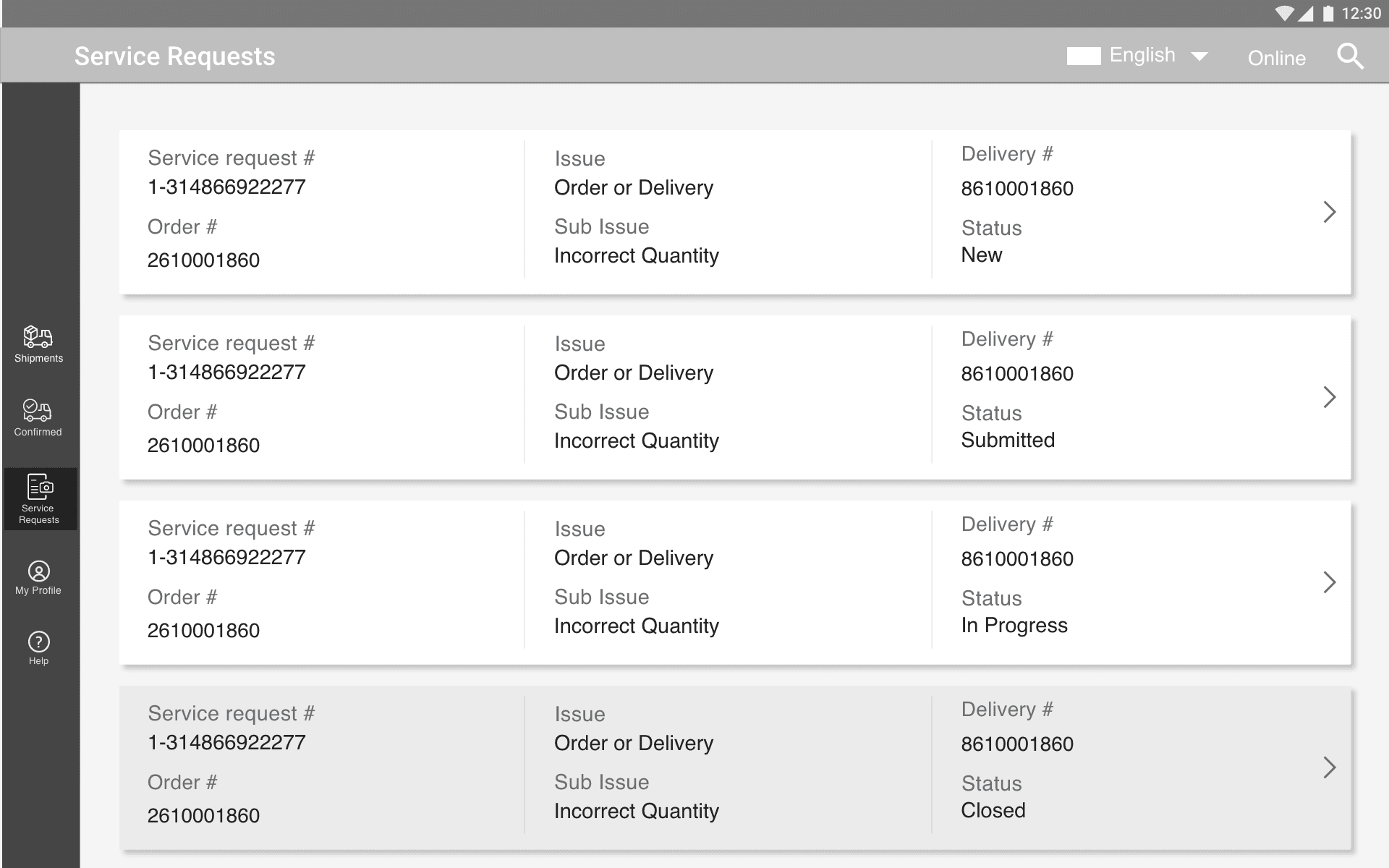
Problem North American distributors manually inspected oil deliveries using paper invoices and personal cameras. Damage reports were entered into systems 3-4 days post-delivery by third parties, causing discrepancies and week-long resolution times.
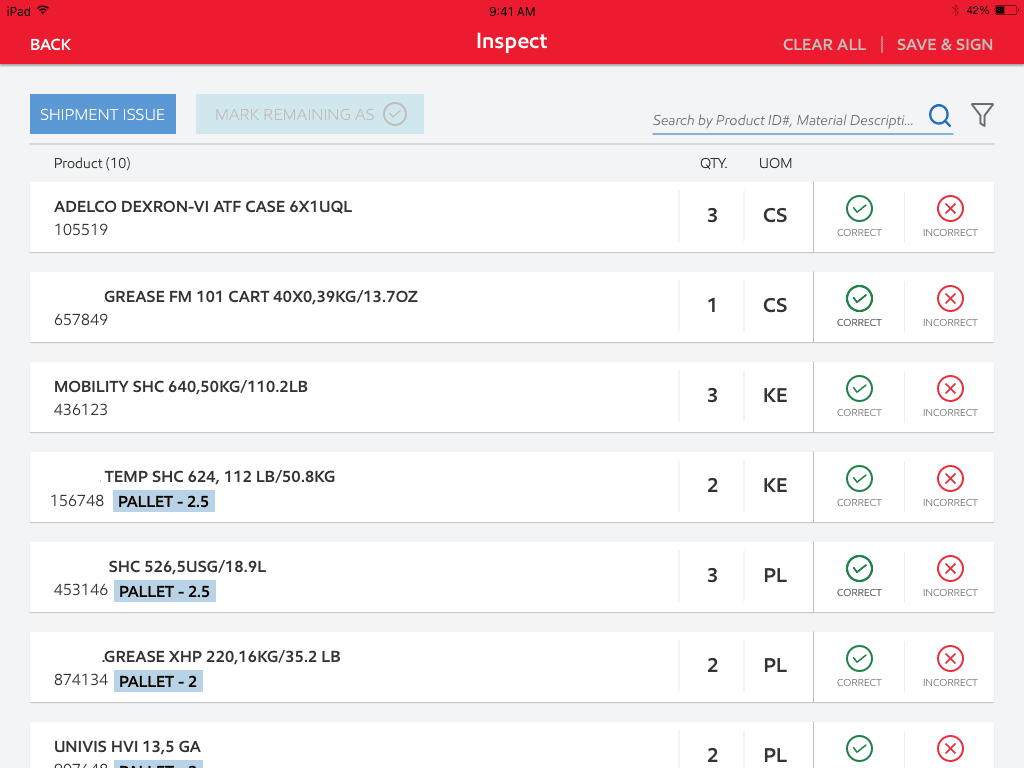
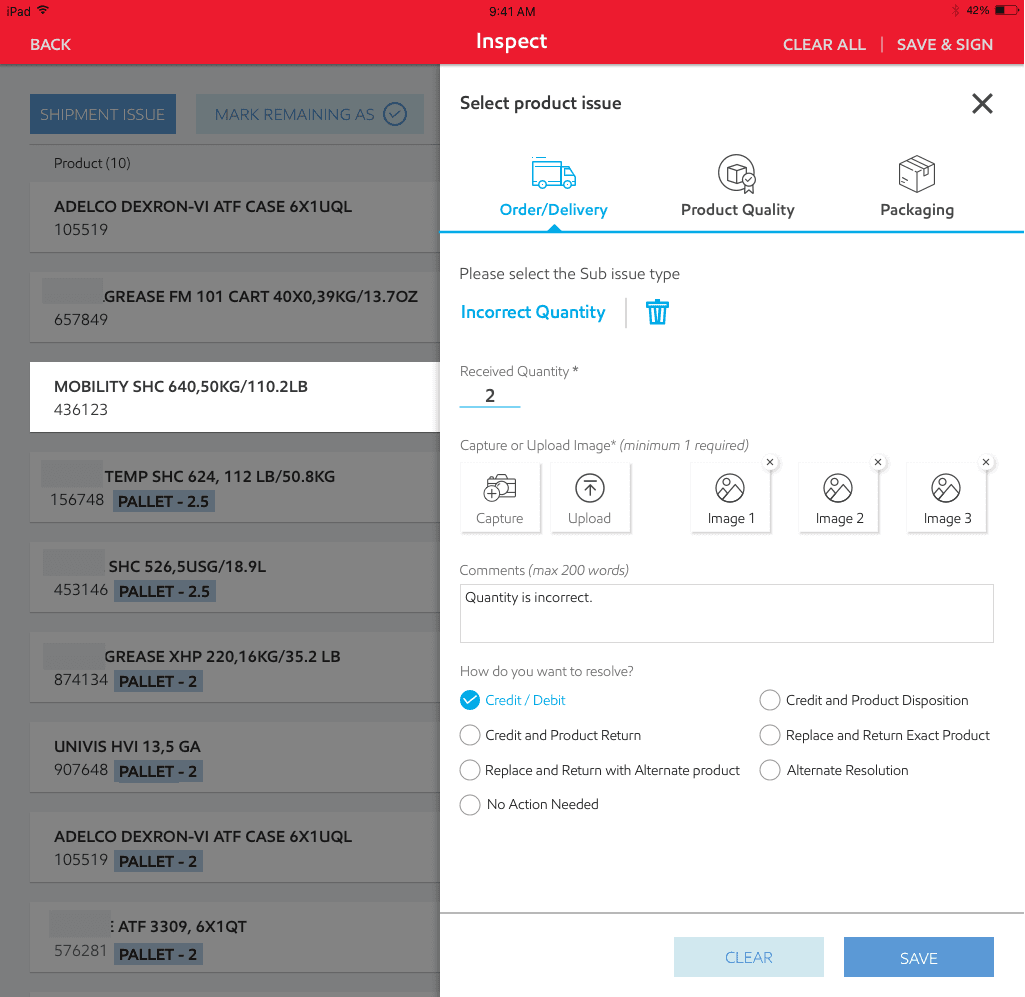
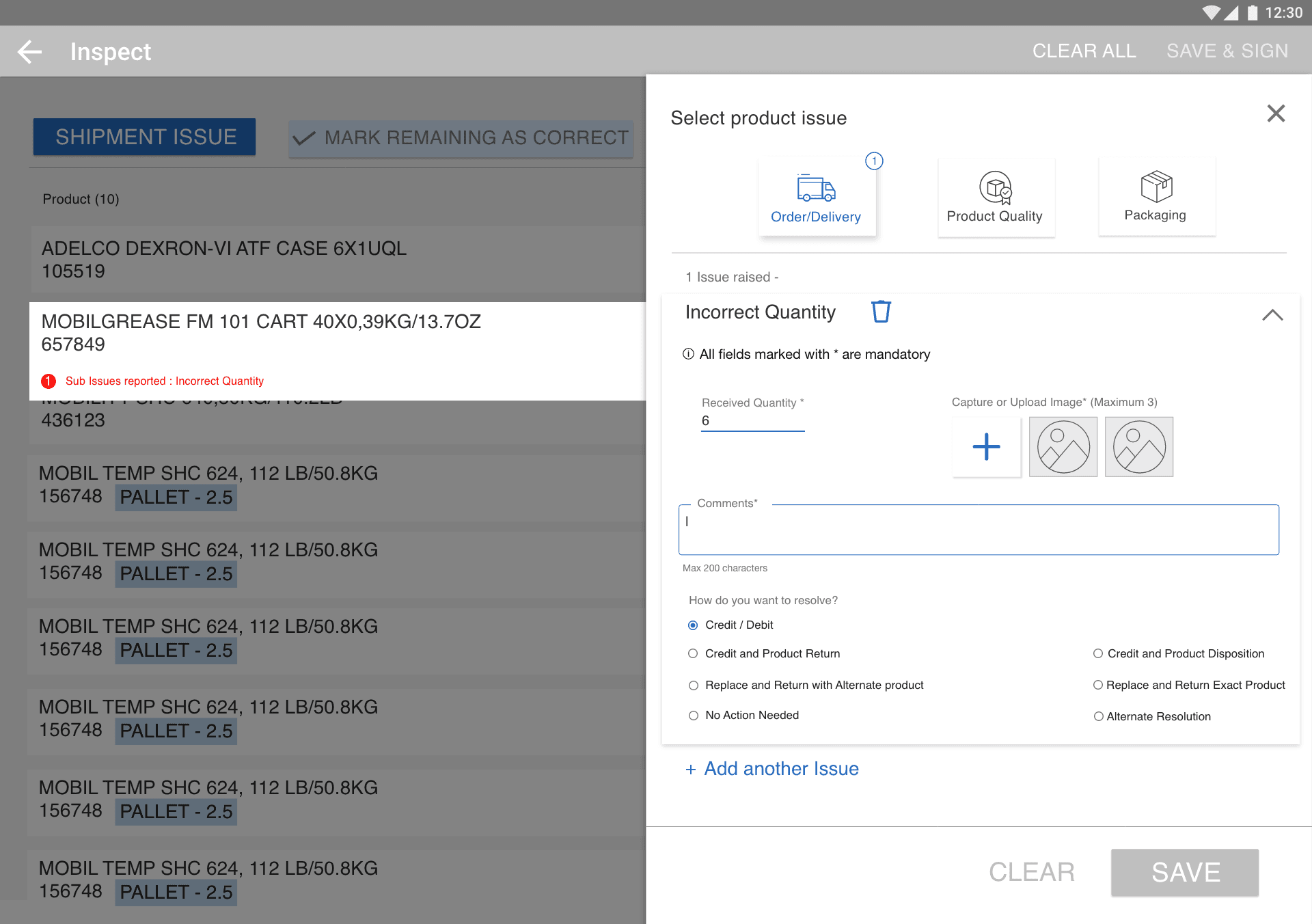
Solution Designed iPad application for real-time goods inspection at point of delivery.
Key Decisions
Simple, guided interactions for non-tech-savvy warehouse operators
Visual inspection workflow with in-app photo capture
Immediate damage reporting eliminating 3-4 day delay
Clear shipment information display based on usability testing feedback

Impact
Reduced reporting time from 2-3 days to half a day (83% reduction)
Usability testing with warehouse operators showed high task completion rates and positive reception
Streamlined process positioned client to dramatically reduce service request resolution times
Outcomes
Delivered 6 MVPs across customer lifecycle touchpoints; 4 converted to full-scale projects for global implementation
Customer feedback strategy informed stakeholders and project leadership about MVP progress and success, enabling data-driven decisions on scaling products globally
Created unified design principles enabling consistent experience across products
Validated designs through usability testing with end users
Established research synthesis framework enabling coordination across multiple product teams